
Generative engine optimization services help a brand get mentioned, cited and recommended inside AI-generated answers from ChatGPT, Google AI Overviews, Perplexity, Gemini, Claude and Microsoft Copilot. Instead of fighting only for a spot in a list of blue links, a GEO provider works on how AI systems find, understand and trust your brand. This guide explains what generative engine optimization services include, how they differ from SEO, what Google and the research actually say, and how to choose a provider without wasting budget.
Thank you for reading this post, don't forget to subscribe!
Key Takeaways
- GEO services aim to earn citations and brand mentions in AI answers, on top of normal search rankings.
- Google says that optimizing for its AI features is still SEO, so strong fundamentals come first.
- Early academic research found that adding credible sources, statistics and expert quotes can lift visibility by up to 40% in tested setups, but results vary by topic and engine.
- A good provider shows a measurement plan across several AI engines, not one lucky screenshot.
- Walk away from anyone who guarantees AI rankings.
What Are Generative Engine Optimization (GEO) Services?
Generative engine optimization services are a set of strategic, content and technical tasks designed to make your brand easy for large language models (LLMs) to find, understand, trust and quote. When someone asks an AI assistant for the best tool, provider or product in a category, the answer is a written summary with a handful of cited sources. GEO is the work of becoming one of those sources.
Where the Term Came From
The label was formalized in a 2023 research paper, GEO: Generative Engine Optimization, by researchers from Princeton, Georgia Tech, the Allen Institute for AI and IIT Delhi. The authors introduced a benchmark called GEO-bench and tested nine optimization methods. Adding citations, statistics and quotations performed best, while old-school keyword stuffing gave little benefit.
GEO vs SEO vs AEO
The industry uses several overlapping names. The table below shows how traditional SEO, answer engine optimization (AEO) and GEO differ in practice.
Table 1: SEO vs AEO vs GEO
| Factor | Traditional SEO | AEO (Answer Engine Optimization) | GEO (Generative Engine Optimization) |
|---|---|---|---|
| Main goal | Rank pages in search results | Be the direct answer or featured snippet | Be cited and recommended in AI-written answers |
| Where you appear | Blue links, snippets | Snippets, voice answers, FAQ boxes | ChatGPT, AI Overviews, Perplexity, Gemini, Claude, Copilot |
| Content focus | Keywords, backlinks, relevance | Short, direct answers and structured data | Citation-worthy facts, entity clarity, original data |
| Core tactics | On-page SEO, link building, technical SEO | FAQ schema, concise answer blocks | Entity optimization, digital PR, structured content, source credibility |
| Success metrics | Rankings, organic clicks | Snippet wins, impressions | Citation rate, brand mentions, AI referral traffic, answer accuracy |

Why GEO Matters in 2026
People increasingly type full questions and receive a synthesized answer instead of ten links. If your brand is missing from that answer, a buyer can finish their research without ever seeing you.
There is an important reality check, though. Google’s own guide on optimizing your website for generative AI features states that, from Google’s perspective, optimizing for generative AI search is optimizing for the search experience, and therefore still SEO. Google also explains in its AI features documentation that a page must be indexed and eligible to appear with a snippet to be shown as a supporting link in AI Overviews or AI Mode, and that no extra special optimizations are required. Both features can use a technique called query fan-out, which runs several related searches across subtopics before writing the answer.
What this means for you: GEO does not replace SEO. It builds on it. The best generative engine optimization services start with crawlability, indexing, helpful original content and clear brand information, then add the AI-specific layers on top. Research on GEO is also still maturing, so treat any provider who claims a secret formula with caution.
What Do Generative Engine Optimization Services Include?
A credible GEO program usually covers the following workstreams.
1. AI Visibility Audit
The provider checks how often and how accurately your brand appears for a set of real buyer questions across several AI engines. The audit also records which competitors and which sources the engines cite instead of you.
2. Prompt and Query Research
Instead of only keywords, the team maps the conversational prompts your customers ask, such as comparisons, how-to questions and best-for questions, and groups them by funnel stage.
3. Entity and Brand Optimization
AI systems rely on clear entities. This workstream makes sure your brand name, products, founders, locations and categories are described consistently on your site, profiles and third-party sources.
4. Content Structuring for Citations
Pages are rewritten so key facts are easy to extract: a direct answer under each heading, comparison tables, step lists, original statistics, named sources and expert quotes. Content must still be written for people first.
5. Technical Foundations and Schema
This covers crawl access, indexing, page speed, clean internal linking and structured data such as Organization, Product, FAQ and Article markup. Be careful with anyone who sells special files or tricks as a must-have: Google has said that things like llms.txt and AI-specific rewriting are not needed for its generative AI features.
6. Digital PR and Third-Party Mentions
AI engines often lean on sources outside your own site, such as reviews, industry lists, forums and news. A good provider earns genuine mentions in those places instead of buying spam.
7. Monitoring and Reporting
Because AI answers change from one run to the next, reporting should track a fixed set of prompts over time, across multiple engines, and connect visibility to traffic and leads.
How a Typical GEO Engagement Works
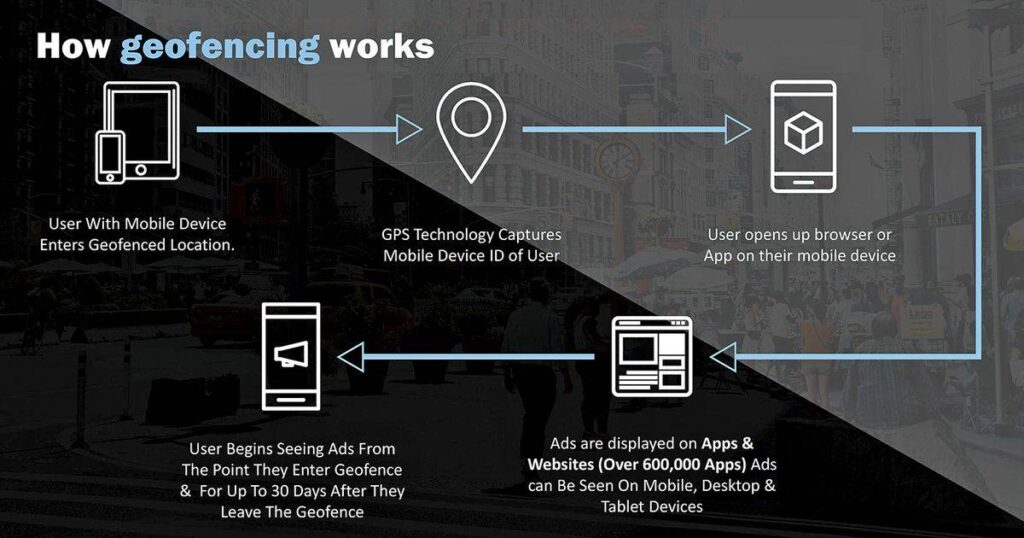
- Discovery and audit: define your market, competitors and priority prompts, then measure the starting point.
- Strategy: choose which pages, entities and external sources to improve first.
- Execution: update content, fix technical issues, add schema and run outreach for third-party coverage.
- Measurement: re-run the same prompt set on a schedule and compare citation rate, mention share and referral traffic.
- Iteration: double down on what moved the numbers and retire what did not.
Which AI Platforms Do GEO Services Cover?
- Google AI Overviews and AI Mode: built on Google’s core search systems, so SEO fundamentals matter most.
- ChatGPT: pulls from web sources when browsing is used, so citations and brand mentions matter.
- Perplexity: shows numbered sources with every answer, making citation tracking easier.
- Gemini and Claude: respond differently by prompt, so test them separately.
- Microsoft Copilot: connected to Bing, so Bing indexing and webmaster tools are worth checking.
Agency, Tool or In-House: Which GEO Delivery Model Fits You?
Table 2: GEO Delivery Models Compared
| Delivery model | Best for | Main strength | Main limitation |
|---|---|---|---|
| GEO agency | Teams that want outside strategy and production | Specialist capacity across content, technical work and PR | Quality depends on the assigned team; learning may stay outside your company |
| GEO software tool | Teams with strong internal execution | Prompt monitoring, citation tracking and competitor views | Dashboards can produce findings faster than your team can act |
| In-house team | Larger brands with content and SEO staff | Full control and deep product knowledge | Needs hiring, training and ongoing testing time |
| Hybrid (tool + consultant) | Growing brands with some internal capacity | Measurement plus expert guidance without a full retainer | Needs clear ownership of who does the work |
Who Needs GEO Services Most?
GEO pays off fastest in categories where buyers ask AI assistants to compare options. Brands in crowded comparison categories, for example readers asking which are the best mobile payment apps, benefit from clear entity information and credible third-party mentions. SaaS and digital product sellers, who might also read our guide to digital goods payment gateway providers, compete in answer-heavy categories where AI recommendations influence shortlists. Publishers of list-style content, such as guides to the best AI tools for beginners or the best free AI tools for students in 2026, gain from clean structure, honest testing notes and sourced facts. E-commerce stores, agencies and local service businesses also benefit when their reviews and descriptions are consistent across the web.
How to Choose the Right GEO Services Provider
Questions to Ask Before You Hire
- Which AI engines and how many prompts will you track, and how often?
- How do you separate GEO work from standard SEO work, and what comes first?
- Can you show a real before-and-after report with methodology, not just screenshots?
- Who actually writes and edits the content, and how do you verify facts?
- How will you earn third-party mentions without spam?
- What happens to the data and reports if we end the contract?
Red Flags to Avoid
- Guaranteed rankings or guaranteed citations in ChatGPT or Gemini.
- A single secret trick, such as one special file, presented as the solution.
- No clear measurement plan or reporting rhythm.
- Mass-produced AI content with no human review.
- Fake reviews, paid spam mentions or manipulation of AI systems.
How to Measure GEO Success
Track a fixed list of buyer prompts across several engines and review them on a schedule, since answers vary between runs. Useful metrics include citation rate, share of brand mentions against competitors, accuracy and sentiment of how AI describes you, referral traffic from AI platforms, branded search growth and leads or sales. Keep Google Search Console and Bing Webmaster Tools in the loop, as both now offer reporting related to AI features.
Frequently Asked Questions About Generative Engine Optimization Services
What are generative engine optimization services?
They are services that improve how often and how accurately your brand appears in AI-generated answers. They combine audits, content structuring, entity work, technical SEO, schema, digital PR and reporting across engines like ChatGPT, Gemini, Perplexity and Google AI Overviews.
Is GEO replacing SEO?
No. Google says optimizing for its generative AI features is still SEO, and its AI answers draw on the same search index and quality systems. GEO adds citation, entity and third-party-mention work on top of a healthy SEO foundation.
How long do GEO services take to show results?
There is no fixed timeline. Technical fixes and content updates can be picked up quickly by some engines, while authority and third-party mentions take longer. Be skeptical of fast guarantees and judge progress by repeated prompt tracking over several months.
How much do generative engine optimization services cost?
Pricing depends on scope, number of engines and prompts, content volume, PR activity and whether you hire an agency, buy a tool or combine both. Ask for a written scope and reporting plan before comparing quotes.
Can small businesses use GEO services?
Yes. A small business can start with fundamentals: a clear site, consistent business details, helpful original content, schema and genuine reviews, then add tracking and outreach as budget allows.

Conclusion
Generative engine optimization services are worth considering if your buyers ask AI assistants for recommendations, but they work best as an extension of solid SEO, not a replacement. Choose a provider that is honest about what is proven, measures results across multiple engines and focuses on genuinely useful content and credible mentions. For more practical tech and digital guides, explore Cognetify.

- Best Ecommerce Platform for SEO in 2026 - October 5, 2026
- 7 Powerful Generative Engine Optimization Services - October 5, 2026
- How Much House Can I Afford With a 100K Salary? - October 3, 2026