Technology is evolving at a remarkable pace, and the latest technology trends are becoming part of everyday business, communication, education, healthcare, transportation, and entertainment. Artificial intelligence is moving beyond simple chatbots, robots are becoming more intelligent, computing infrastructure is being redesigned for demanding workloads, and cybersecurity is adapting to increasingly complex digital environments.
Thank you for reading this post, don't forget to subscribe!At the same time, quantum computing, edge computing, intelligent Internet of Things systems, specialized AI chips, cloud platforms, and next-generation connectivity are developing rapidly. These technologies are not progressing independently. Instead, they are increasingly connected, creating a technology ecosystem where artificial intelligence, hardware, software, networking, automation, and cybersecurity support one another.
One of the most important changes in 2026 is the growing convergence between digital intelligence and the physical world. AI agents can perform multi-step tasks, intelligent machines can interact with their surroundings, and connected devices can process information closer to where it is generated.
Understanding the latest technology trends is therefore useful for businesses, professionals, students, developers, and everyday technology users. This guide explores ten major innovations, explains how they work, and examines their potential impact on the future.
What Are the Latest Technology Trends?
The latest technology trends are technologies that are developing rapidly, gaining commercial attention, attracting investment, increasing adoption, or creating new opportunities across different industries.
Some technologies are already mature. Cloud computing, smartphones, broadband networks, and conventional cybersecurity have become important parts of modern digital infrastructure. Other technologies, such as agentic AI, physical AI, advanced robotics, and quantum computing, are still developing.
A technology does not have to be completely new to become an important trend. A mature technology can experience a major transformation when new capabilities are introduced. For example, cloud computing existed before the current AI boom, but AI workloads are changing the way businesses think about cloud infrastructure, specialized processors, storage, networking, and energy consumption.
The same principle applies to connected devices. Traditional IoT systems mainly collected and transferred information, while newer intelligent IoT systems can use machine learning and edge computing to analyze information and support automated decisions.
This means technology trends should be viewed as an evolving ecosystem rather than a list of isolated inventions.
Why Is Technology Changing So Quickly in 2026?
Several forces are accelerating innovation. The strongest driver is the expansion of artificial intelligence across software, business processes, scientific research, cybersecurity, robotics, and digital services.

Businesses are also generating more data than ever. Websites, smartphones, sensors, connected vehicles, industrial equipment, applications, and digital transactions continuously create information. Organizations need technologies that can store, process, secure, and analyze this data efficiently.
Computing requirements are increasing as well. Modern AI models can require substantial processing power, memory, storage, and networking. This is encouraging innovation in semiconductors, data centers, cloud platforms, cooling systems, and energy management.
Another factor is the growing demand for automation. Companies want to reduce repetitive work, improve operational efficiency, respond faster to customers, and make better use of their employees’ time.
Security is another major consideration. As more devices and applications become connected, the potential attack surface also expands. This is encouraging investment in identity management, data protection, threat detection, secure software development, and AI security.
Together, these factors are pushing the latest technology trends from experimental research toward practical applications.
10 Latest Technology Trends to Watch in 2026
1. Agentic AI Is Moving Beyond Traditional Chatbots
Agentic AI is one of the most significant developments in artificial intelligence. Traditional generative AI generally responds to a user’s prompt by generating text, images, code, summaries, or other content. AI agents aim to perform more complex, multi-step tasks.

An agent can potentially interpret a goal, plan a sequence of actions, use external tools, retrieve information, interact with software, and complete connected tasks. This changes the role of AI from a system that mainly provides answers into a system that can participate in workflows.
For example, a conventional AI assistant might explain how to prepare a business report. An AI agent could potentially gather information, organize documents, analyze data, prepare a draft, and update a designated workspace.
The technology still has important limitations. Reliability, access permissions, data privacy, security, monitoring, and human oversight are essential when an AI system can take actions rather than simply provide information.
| Traditional Generative AI | Agentic AI |
| Primarily responds to prompts | Can work toward a defined goal |
| Generates content or answers | Can perform connected actions |
| Usually needs repeated instructions | Can manage multiple workflow steps |
| Limited tool interaction | Can use external tools and applications |
| Human directs most actions | Human can supervise automated actions |
The development of AI agents could influence customer service, software development, research, administration, marketing, finance, and many other knowledge-based activities.
2. Physical AI and Advanced Robotics Are Entering the Real World
Artificial intelligence is no longer limited to screens and software. Physical AI refers to intelligent systems that can perceive and interact with physical environments, while robotics provides one of the clearest examples of this development.
Modern robots can combine cameras, sensors, computer vision, machine learning, language models, navigation systems, and motion control. This can make them more adaptable than traditional machines designed to perform a fixed sequence of actions.
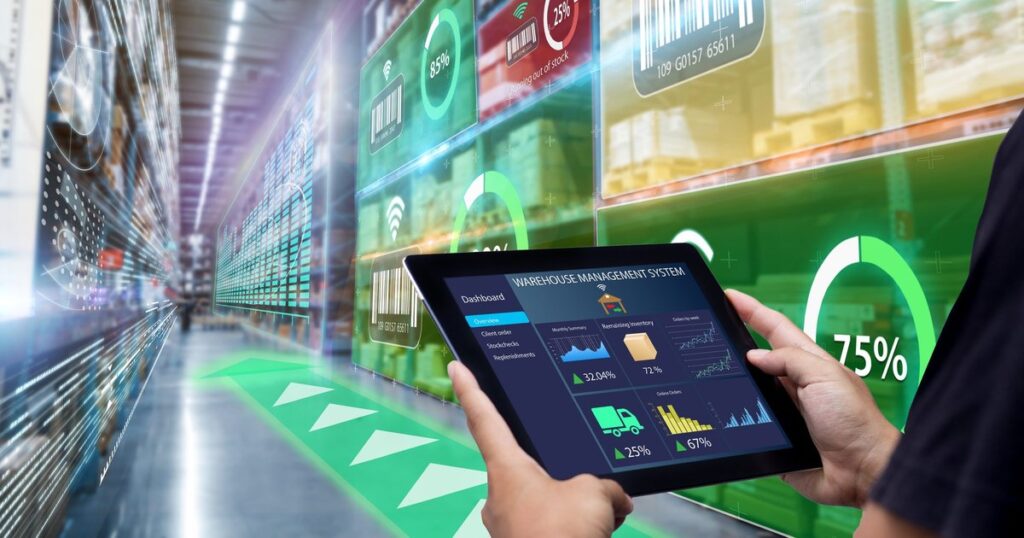
Manufacturing and warehouses are important areas for robotics, but applications can also extend to logistics, agriculture, healthcare, inspection, transportation, and other environments.
The combination of AI and robotics is particularly significant because software intelligence can be connected to physical action. A machine can potentially identify an object, interpret its surroundings, make a decision, and perform a physical task.
However, real-world environments are unpredictable. Robots must handle safety requirements, changing conditions, hardware limitations, maintenance, and potentially high deployment costs. These factors will influence how quickly advanced robotics becomes widespread.
3. AI Infrastructure and Specialized Chips Are Expanding
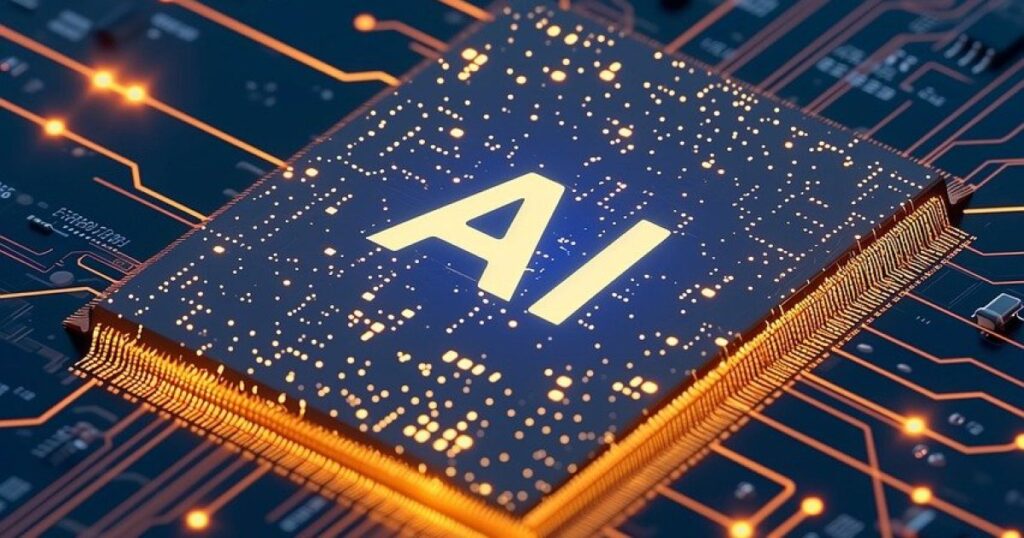
The growth of AI depends heavily on computing infrastructure. Advanced models require processors, memory, storage, networking, and data-center capacity capable of handling demanding workloads.
Specialized AI accelerators are designed to process certain workloads more efficiently than general-purpose processors. Graphics processing units and other AI-focused hardware have become important for model training and inference.
This hardware development is influencing the entire computing ecosystem. Data centers require high-speed networking, advanced cooling, reliable power systems, and large-scale storage. As AI adoption increases, infrastructure efficiency becomes increasingly important.
Energy consumption is another major issue. Large computing facilities can require significant electricity and cooling resources. This means future AI infrastructure will need to consider not only processing performance but also energy efficiency and operational cost.
The growth of specialized hardware demonstrates why the latest technology trends are interconnected. AI software cannot scale without suitable computing infrastructure.
4. Cybersecurity Is Becoming More AI-Driven
Cybersecurity is changing as organizations become more dependent on cloud platforms, connected devices, AI systems, and digital services.
Traditional security methods often rely on known indicators, predefined rules, and manual investigation. AI-based security systems can analyze large volumes of activity and identify unusual patterns that might otherwise be difficult to detect.
AI can support security teams by helping prioritize alerts, analyze behavior, identify anomalies, automate repetitive investigation tasks, and respond to certain threats.
However, AI also creates new security challenges. Attackers can use automation and AI-based tools to increase the speed and scale of certain malicious activities. Organizations therefore need to protect both their conventional infrastructure and the AI systems themselves.
Identity management, access control, data protection, secure software development, threat detection, and AI governance are becoming increasingly important.
As organizations give AI systems access to business applications and sensitive information, permissions must be carefully managed. An intelligent system with excessive access could create significant security risks if it is misconfigured or compromised.
5. Quantum Computing Continues to Develop
Quantum computing represents a different approach to computation. Instead of relying exclusively on classical bits, quantum computers use quantum-mechanical properties to process information.
Researchers are investigating potential applications in areas such as chemistry, materials science, optimization, scientific simulation, and cryptography.
Quantum computing is still an emerging field. It is not a replacement for conventional computers, smartphones, or cloud infrastructure. Instead, its potential lies in specialized computational problems where quantum approaches could eventually provide significant advantages.
One of the most important connections between quantum technology and cybersecurity is post-quantum cryptography. Organizations are exploring cryptographic methods designed to remain secure against future quantum computing capabilities.
This makes quantum computing relevant to cybersecurity even before large-scale quantum machines become practical for many commercial applications.
The development of quantum systems will depend on advances in hardware, error correction, algorithms, software, and supporting infrastructure. For businesses, understanding the technology and preparing for potential cryptographic changes can be more practical than expecting immediate widespread quantum computing.
6. Edge Computing Is Bringing Intelligence Closer to Devices
Cloud computing provides powerful centralized infrastructure, but sending every piece of data to a remote data center is not always efficient.
Edge computing addresses this issue by processing some information closer to where it is generated. This can happen on devices, local servers, gateways, or other infrastructure near the source of the data.
The approach is useful for smart cameras, industrial machines, autonomous systems, smartphones, wearable devices, connected vehicles, and IoT applications.
One major advantage is lower latency. When information is processed locally, a system may respond more quickly because it does not need to send every request to a distant cloud server and wait for a response.
Edge computing can also reduce network traffic. Instead of continuously transmitting raw data, a device can process information locally and send only relevant results.
Privacy can also benefit in certain situations because some information can be analyzed locally rather than transmitted to centralized systems.
Edge computing does not replace cloud computing. Instead, both approaches can work together. The cloud can handle large-scale storage and analysis while edge systems provide fast local processing.
7. Cloud Computing Is Evolving for AI Workloads
Cloud computing remains a major foundation of digital business, but AI is changing cloud requirements.
AI applications often need scalable computing resources, specialized processors, large storage capacity, fast networking, and efficient data pipelines. Cloud platforms allow organizations to access these resources without necessarily building all infrastructure themselves.
However, not every workload should automatically move to the cloud. Businesses increasingly need to decide where different applications and data should be processed.
Some workloads are well suited to centralized cloud environments. Others may require edge processing because of latency, privacy, connectivity, or operational requirements. Hybrid architectures can combine cloud, on-premises infrastructure, and edge systems.
Cost management is another important consideration. AI workloads can consume substantial computing resources, so organizations need to monitor infrastructure usage and optimize applications.
The future of cloud computing will therefore involve more specialized infrastructure and greater integration with AI, data analytics, cybersecurity, and edge computing.
8. Intelligent Internet of Things Is Growing
The Internet of Things connects physical devices to networks so they can collect, exchange, and process information. Examples include smart sensors, connected appliances, industrial equipment, vehicles, wearable devices, and building-management systems.
Traditional IoT systems often focus on collecting data. Intelligent IoT adds AI-based analysis, allowing systems to identify patterns and potentially support automated decisions.
For example, an industrial monitoring system can collect information about temperature, vibration, pressure, or machine performance. AI models can analyze this information and identify unusual patterns that may indicate a potential equipment problem.
This can support predictive maintenance and reduce unexpected downtime.
The combination of IoT, AI, edge computing, cloud platforms, and cybersecurity is creating increasingly intelligent connected environments.
However, every connected device can introduce security considerations. Weak passwords, outdated software, poor access controls, or insecure network configurations can create vulnerabilities. Security must therefore be considered when IoT systems are designed and deployed.
9. AI-Native Software Development Is Changing App Creation
Software development is experiencing a major transformation because AI can assist developers throughout the development lifecycle.
Modern coding assistants can help generate code, explain unfamiliar functions, identify potential errors, write tests, create documentation, and assist with debugging.
AI-native development goes further by integrating AI into planning, design, coding, testing, review, documentation, and maintenance.
This can help developers work more efficiently, particularly when handling repetitive programming tasks. AI can also make it easier to explore unfamiliar frameworks or understand existing codebases.
However, AI-generated code still requires human review. Generated code can contain bugs, security vulnerabilities, incorrect assumptions, or inefficient implementations.
Software quality depends on more than producing code quickly. Architecture, testing, security, maintainability, performance, and requirements analysis remain important.
The most useful approach is therefore to treat AI as a development assistant rather than assuming that generated code is automatically correct.
10. Next-Generation Connectivity and Satellite Technology Are Expanding
Connectivity is another foundation of digital transformation. Mobile networks, fiber broadband, Wi-Fi, and satellite systems are developing alongside one another.
Satellite connectivity can help extend communication services to areas where conventional infrastructure is difficult or expensive to deploy. Advances in satellite technology may also support connected devices and remote operations.
Improved connectivity benefits many other technologies. Autonomous systems need reliable communication, IoT devices require networks to exchange information, cloud applications depend on connectivity, and remote operations require dependable data transmission.
The combination of terrestrial networks and satellite systems can therefore support broader digital access and more connected environments.
Future connectivity will likely involve multiple technologies working together rather than one network replacing everything else.
Latest Technology Trends: Comparison of Major Technologies
The following table provides a simplified view of how these technologies differ in purpose and development stage.
| Technology | Main Purpose | Development Stage | Key Application |
| Agentic AI | Multi-step task automation | Rapidly developing | Business workflows |
| Physical AI | Intelligent physical interaction | Developing rapidly | Robotics |
| AI Chips | Accelerated AI processing | Expanding | AI infrastructure |
| AI Cybersecurity | Threat analysis and protection | Rapidly developing | Digital security |
| Quantum Computing | Specialized computation | Early development | Research and cryptography |
| Edge Computing | Local processing | Growing adoption | Real-time applications |
| Cloud Computing | Scalable infrastructure | Mature and evolving | Digital services |
| Intelligent IoT | Connected intelligent systems | Expanding | Smart environments |
| AI-Native Development | AI-assisted software creation | Rapidly developing | Software engineering |
| Next-Gen Connectivity | Broader and faster communication | Continuing development | Connected systems |
How These Technology Trends Are Connected
The latest technology trends are increasingly connected rather than operating as separate categories.
Consider an intelligent industrial system. Sensors can collect information from machines. Edge computing can process that information locally. AI can identify unusual patterns. Cloud infrastructure can store historical data and perform larger-scale analysis. Specialized processors can accelerate AI workloads, while cybersecurity protects the connected environment.
The same pattern can be seen in robotics. A robot may use sensors to understand its environment, AI to interpret information, specialized chips to perform computations, connectivity to exchange data, and cybersecurity controls to protect its systems.
This convergence is one of the most important characteristics of modern technology development.
AI is becoming a component within many other technologies rather than remaining a separate product category.
How the Latest Technology Trends Could Affect Everyday Life
Technology innovation will not only affect large corporations. Many developments are likely to influence ordinary digital experiences.
Smartphones may increasingly perform AI processing directly on the device. Digital assistants may become capable of handling more complicated requests. Connected homes may use sensors and intelligent systems to automate routine functions.
Healthcare applications may combine AI analysis with connected monitoring devices. Education platforms may use adaptive systems to personalize learning experiences. Transportation systems may become more connected, while industrial automation may influence how products are manufactured and delivered.
However, increased automation also creates questions about privacy, data ownership, security, transparency, and human control.
The value of technology depends not only on what a system can do but also on how responsibly it is designed and used.
What Skills Will Be Important in Future Technology?
The changing technology landscape means that technical knowledge will remain valuable, but technology skills are no longer limited to programmers.
Artificial intelligence, machine learning, cloud computing, cybersecurity, data analysis, software development, automation, networking, and digital privacy are becoming relevant across many professions.
At the same time, human skills remain important. Critical thinking, communication, creativity, problem-solving, collaboration, and adaptability can help people work effectively with increasingly capable digital tools.
Students and professionals do not necessarily need to master every emerging technology. A better approach is to develop strong digital foundations and learn how new tools apply to their particular field.
Challenges Created by Emerging Technologies
The latest technology trends create significant opportunities, but they also introduce challenges.
Security and privacy are major concerns. More connected devices and AI systems can create additional points where sensitive information may be exposed.
Cost is another issue. Advanced computing systems require hardware, energy, networking, storage, maintenance, and specialized expertise.
Reliability is also important. A technology that performs well in a demonstration may require extensive testing before it can safely support important business or public-facing processes.
Organizations also need to consider regulation, responsible AI, workforce changes, data governance, digital inequality, and long-term infrastructure requirements.
Technology adoption should therefore involve more than purchasing the newest tool. Businesses need to evaluate whether a technology actually solves a meaningful problem.
How Businesses Can Prepare for New Technology
Businesses do not need to adopt every emerging technology simply because it is receiving attention.
A practical approach is to begin with a specific business problem. The organization can then evaluate whether AI, automation, cloud computing, edge processing, cybersecurity tools, or another technology can address that problem.
For example, a company dealing with repetitive administrative work could investigate AI-assisted automation. A business experiencing network latency might examine edge computing. An organization handling sensitive information may need to prioritize cybersecurity and access management before expanding automation.
Important evaluation factors include cost, performance, security, scalability, infrastructure requirements, employee skills, data requirements, and expected business value.
This problem-first approach can help organizations distinguish practical innovation from short-term technology hype.
Technology Trends Comparison: Traditional and Emerging Approaches
| Area | Traditional Approach | Emerging Direction |
| AI | Prompt-based assistance | Goal-oriented AI agents |
| Robotics | Fixed automation | Adaptive intelligent robots |
| Computing | General-purpose processors | Specialized AI accelerators |
| Security | Rule-based detection | AI-assisted behavioral analysis |
| Data Processing | Centralized processing | Cloud-edge combination |
| IoT | Data collection | AI-powered decision support |
| Software Development | Manual coding | AI-assisted development |
| Connectivity | Terrestrial networks | Multi-network and satellite integration |
Frequently Asked Questions
What is the biggest technology trend in 2026?
Artificial intelligence is one of the central forces influencing technology in 2026. Its applications now extend beyond content generation into software development, cybersecurity, robotics, infrastructure, data analysis, and automated business workflows.
What are the latest technology trends?
Major developments include agentic AI, physical AI, advanced robotics, specialized AI chips, AI-driven cybersecurity, quantum computing, edge computing, cloud evolution, intelligent IoT, AI-native software development, and next-generation connectivity.
Which emerging technologies should businesses watch?
Businesses can monitor developments in AI agents, cybersecurity, AI infrastructure, robotics, cloud and edge computing, quantum technologies, intelligent automation, and connected systems. The appropriate technology depends on an organization’s goals, budget, infrastructure, data requirements, and security needs.
Which emerging technologies should businesses watch?
Businesses can monitor developments in AI agents, cybersecurity, AI infrastructure, robotics, cloud and edge computing, quantum technologies, intelligent automation, and connected systems. The appropriate technology depends on an organization’s goals, budget, infrastructure, data requirements, and security needs
How is AI changing technology in 2026?
AI is becoming integrated into software, cybersecurity, robotics, scientific research, cloud infrastructure, connected devices, and business automation. Instead of existing as an isolated category, AI is increasingly becoming a foundational capability within other technologies.
What will technology look like in the future?
Future technology is likely to involve greater integration between artificial intelligence, robotics, connected devices, advanced computing, cybersecurity, and digital infrastructure. However, the exact applications that become mainstream will depend on technical progress, cost, security, regulation, and user adoption.
Is quantum computing ready for everyday use?
Quantum computing remains an emerging technology. Current systems are mainly being developed and researched for specialized applications rather than replacing conventional computers for everyday tasks.
Why is edge computing important?
Edge computing can process information closer to the device or location where it is generated. This can reduce latency, decrease unnecessary data transfers, and support applications that require fast local responses.
Will AI replace software developers?
AI can automate or accelerate parts of software development, including code generation, testing, documentation, and debugging. However, software architecture, requirements analysis, security, validation, and complex engineering decisions still require human involvement.
Final Thoughts
The latest technology trends in 2026 demonstrate that the future of technology is not being shaped by one invention alone. Artificial intelligence, robotics, cloud infrastructure, specialized chips, cybersecurity, edge computing, IoT, quantum computing, software development, and connectivity are developing alongside one another.
AI is becoming more capable of handling complex workflows. Robotics is bringing intelligence into physical environments. Specialized hardware is supporting demanding workloads, while edge and cloud computing are providing different ways to process data.
Cybersecurity is becoming increasingly important as systems become more connected, and quantum computing continues to develop as a potential long-term technology for specialized computational problems.
The biggest shift may be the growing convergence between these technologies. A future intelligent system could combine AI models, sensors, specialized processors, cloud infrastructure, edge computing, connectivity, and cybersecurity into one integrated environment.
For businesses and individuals, the goal should not be to follow every new technology blindly. Understanding what each technology does, where it provides value, what limitations it has, and how it can solve real problems is more useful than simply following hype.
As these developments continue, digital technology will become increasingly embedded in everyday experiences. Following the latest technology trends can therefore provide a clearer understanding of how computing, automation, connectivity, and artificial intelligence are shaping the next generation of digital life.

- Best Ecommerce Platform for SEO in 2026 - October 5, 2026
- 7 Powerful Generative Engine Optimization Services - October 5, 2026
- How Much House Can I Afford With a 100K Salary? - October 3, 2026