
If you’ve been looking for a real, honest guide on Sora AI for video marketing in 2026, you just found it, and what’s happening right now is going to change the way you think about content creation forever.
Thank you for reading this post, don't forget to subscribe!Here’s a quick story to set the scene.
A small skincare brand in Austin, Texas, recently launched a full product campaign, cinematic shots, background music, voiceover, the works. It looked like something a big agency produced over several weeks. The total cost? Around $20. The total time? One afternoon.
They used Sora AI.
That kind of story was science fiction two years ago. In 2026, it’s just Tuesday. And if you’re a marketer, a small business owner, or a content creator who hasn’t looked closely at what Sora AI can do, you’re about to have a very eye-opening few minutes.
Let’s get into it.
What Is Sora AI and Why Is Everyone Talking About It?
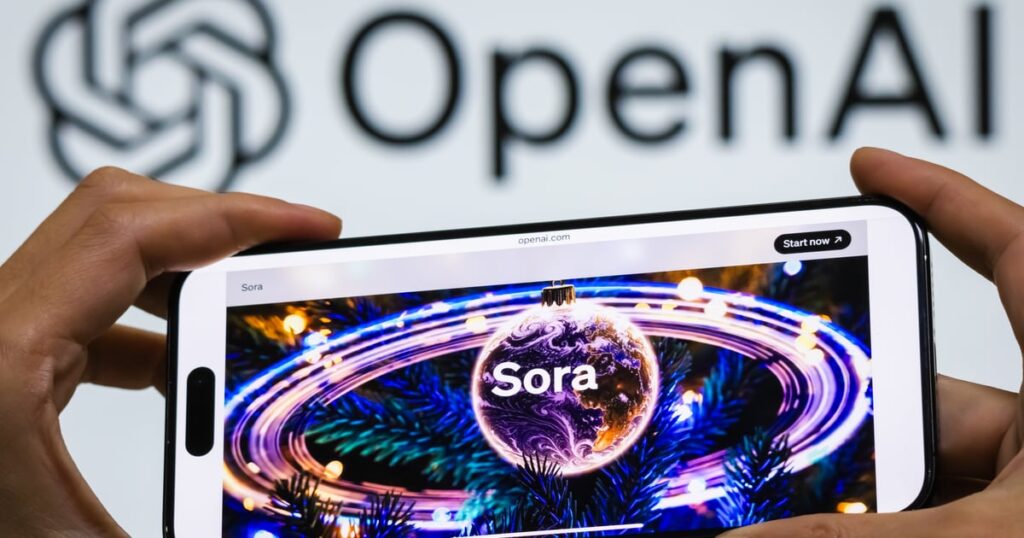
Sora is OpenAI’s AI video generation tool. You type a description or give it a script, and it creates a fully rendered video. No camera. No crew. No editing software. Just words in, video out.
The original version launched in 2024 and was impressive but limited. Short clips. No audio. Occasional strange visual glitches that gave away the AI origin immediately.
Sora 2, released in 2026, is a completely different product.
It’s not an experiment anymore. It’s a professional-grade video creation tool that small businesses, marketing teams, and independent creators are using every single day to produce content that competes with studio-quality productions at a fraction of the cost.
Here’s what’s new in the 2026 version:
- Longer videos, Sora 2 can generate seamless clips up to 20-25 seconds long, compared to just 6 seconds in the original
- Synchronized audio. It now generates sound effects, ambient noise, and dialogue that actually match the lip movements and on-screen action.n
- Consistent characte.rs You can create a custom character and usitem across multiple scenes and videos, keeping your brand identity consistent.
- Licensed partnerships. Through major deals (including a reported $1 billion partnership with Disney), Sora 2 supports the integration of recognizable characters for approved commercial use.
That last point alone tells you everything about where this technology is heading. When Disney signs a billion-dollar deal around AI video, this is no longer a niche creator tool. It’s mainstream.
The Financial Reality: Video Production Just Got 70% Cheaper
Let’s talk numbers because at Cognetify, the financial angle always matters.
Traditional video marketing is expensive. A single 30-second professional ad typically requires:
- A scriptwriter
- A camera crew and director
- Actors or on-screen talent
- A location or studio rental
- Post-production editing and color grading
- Sound design and mixing
Add it all up,p, and you’re looking at anywhere from $3,000 to $30,000 for a single ad before it ever reaches a single customer.
With Sora AI in 2026, companies are reporting a 70% drop in content creation costs.
For a small business, this is transformative. A $20/month Plus subscription gives you enough credits to produce around 50 short HD videos per month. Think about what that means for a social media strategy that used to require a production budget.
For finance-minded readers, here’s the ROI framing: if you were previously spending $5,000 a month on video content and you can now produce the same volume for $200, that’s $4,800 back into your business every single month. Over a year, that’s nearly $58,000.
That’s not a minor efficiency gain. That’s a business model shift.
Sora AI Pricing in 2026: What Do You Actually Get?
OpenAI has moved to a fully paid model for Sora. Here’s the breakdown:
| Plan | Monthly Cost | Credits | What You Can Make |
|---|---|---|---|
| Plus | $20/month | ~1,000 credits | ~50 short HD videos |
| Pro | $200/month | ~10,000 credits | High volume + priority rendering |
| Enterprise | Custom pricing | Unlimited API access | Large agencies and brands |
For most small businesses and solo creators, the Plus plan is more than enough to handle a full month of social media content. You’re not going to run out of credits posting three to five videos a week.
For marketing agencies or teams running multiple brand accounts, the Pro plan makes more sense, especially with the priority rendering that cuts wait times significantly during high-traffic periods.
The Enterprise tier is where it gets interesting for larger FinTech companies and media brands. Custom API pricing means you can integrate Sora directly into your existing content pipeline, automating video generation at scale.
5 Real Ways Businesses Are Using Sora AI for Video Marketing in 2026 Right Now
This isn’t theoretical. Here’s how brands are actually using Sora AI in 2026:
1. Rapid Campaign Prototyping
Instead of spending three weeks on a storyboard and pre-production meeting, marketing teams are using Sora to visualize an entire campaign concept in a single afternoon. Show the client a rough visual prototype before spending a dollar on actual production.
2. Localized Advertising at Scale
This one is a genuine game-changer for global brands. An ad film, ed or rather, generated in a New York setting can be instantly re-created for a Tokyo market with local architecture, street signs, and language. What used to require separate location shoots in different countries now takes about 10 minutes.
3. Personalized Video Outreach
Imagine sending a high-value sales prospect a short video where the AI visually demonstrates how your product solves their specific problem and references their company name and industry. Personalized video funnels like this are already being used by B2B sales teams to dramatically increase response rates.
4. Social Media Content at Volume
Brands that post consistently on TikTok, Instagram Reels, and YouTube Shorts need a constant supply of fresh visual content. Sora lets a one-person marketing team produce the volume of content that used to require a full creative department.
5. Product Visualization for E-Commerce
Instead of expensive product photography and video shoots, e-commerce brands are generating cinematic product teasewith rs different angles, different lighting setups, and different background environments all from a single product description.
The “AI Slop” Problem: Why Perfect Videos Are Starting to Fail
Here’s something most Sora guides won’t tell you, and it’s important.
Because anyone can now generate polished-looking videos, social media feeds are starting to fill up with what content experts are calling “AI Slop” videos that look technically perfect but feel empty. No soul. No story. No human connection.
Audiences are getting good at sensing it. TikTok users, in particular, have developed an almost instinctive ability to spot AI-generated content that was made for volume rather than connection. And when they sense it, they scroll past.
The lesson here is straightforward: Sora AI is an incredible production tool, but it cannot replace the human story behind the video.
The brands that are winning with AI video in 2026 are the ones using Sora to handle the visual production while keeping the emotional core of the content deeply human. A real insight. A genuine problem is being solved. A specific person is being spoken to.
Use AI for the “how it looks.” Keep humans in charge of “what it means.”
That combination of AI efficiency plus human authenticity is the creative formula that’s actually working right now.
Ethics, Watermarking, and the Rules You Need to Know
This section is important, especially if you’re using AI video for business purposes.
In 2026, regulations around AI-generated content have tightened significantly. The EU AI Act now requires that all AI-generated videos be clearly labeled as such. Other major markets are following suit with similar disclosure requirements.
Sora 2 is already built for this. Every video generated through the platform includes an invisible watermark using the C2PA (Coalition for Content Provenance and Authenticity) standard. This watermark is detectable by platforms and regulators, even if it’s not visible to the human eye.
What does this mean for you as a business?
- Always disclose when a video is AI-generated or AI-enhanced,d especially in advertising.ng
- Never use AI video to impersonate real people or create misleading content about real events.nts
- Keep records of your Sora prompts and output. This is good practice for compliance and brand accountability.
Transparency isn’t just a legal requirement in 2026. It’s a trust signal. Audiences who know you use AI tools thoughtfully and honestly are more likely to trust your brand than audiences who feel deceived.
How to Use Sora AI With Your Existing Workflow
If you’re already using AI tools for content creation, like the AI agents we covered in our previous guide, Sora fits naturally into an automated content pipeline.
Here’s a simple workflow that many content teams are running in 2026:
Step 1: Use an AI writing tool (or ChatGPT) to generate a video script and scene descriptions
Step 2: Feed those scene descriptions into Sora 2 to generate the raw video clips
Step 3: Use a simple editing tool (CapCut, Adobe Express) to assemble clips, add captions, and adjust pacing
Step 4: Publish through a scheduling tool (Buffer, Later) across your social platforms automatically
The whole process from idea to published video can happen in under two hours for a single creator. That’s a workflow that would have required a team of five people just three years ago.
Is Sora AI Worth It for Your Business? The Honest Answer
Let’s cut through the hype and give you a straight answer.
Sora AI is worth it if:
- You need regular video content for social media, and you currently spend time or money producing it
- You’re a small business that can’t afford traditional video production
- You run a marketing agency that needs to scale content production across multiple clients
- You want to test video ad concepts before committing to a full production budget
Sora AI is NOT the right tool if:
- You need long-form video content (interviews, documentaries, tutorials). Sora is still limited to short clips.
- Your brand relies heavily on authentic, real-person storytelling, and audiences can tell the difference and may not connect as deeply.
- You’re in a highly regulated industry where AI disclosure requirements make video production more complex.x
For most marketers and business owners reading this, the honest answer is: yes, iworth tryingn gi, ng especially at $20/month. The risk is now, and the potential upside is enormous.
People Also Ask
What are S, a, A, I, and how does it work for video marketing?
Sora is OpenAI’s AI video generation tool. You provide a text description or script, and it generates a fully rendered video with synchronized audio. In 2026, Sora 2 can produce professional-quality clips up to 25 seconds long, making it a practical tool for business video marketing.
How much does Sora AI cost in 2026?
Sora AI costs $20/month for the Plus plan (around 50 short HD videos) and $200/month for the Pro plan with higher volume and priority access. Enterprise pricing is available for agencies and large brands needing API access.
Can small businesses use Sora AI for marketing?
Yes, the Plus plan at $20/month gives small businesses enough credits to produce a full month of social media video content. Companies using AI-generated video have reported up to 70% reduction in content production costs.
Is AI-generated video legal to use in advertising?
Yes, but disclosure rules apply. The EU AI Act and similar regulations require AI-generated videos to be labeled. Sora 2 includes invisible C2PA watermarks in all outputs, and businesses should always disclose AI-generated content to their audience.
What is “AI Slop” and how do I avoid it?
AI Slop refers to technically perfect but emotionally empty AI-generated videos that audiences scroll past because they feel impersonal. To avoid it, use Sora for visual production but keep your scripts and messaging deeply human and specific to your audience.
How is Sora AI different from other video tools?
Sora AI generates video entirely from text prompts, with no filming required. Unlike traditional editing tools (Premiere, Final Cut), you don’t need existing footage. Unlike older AI video tools, Sora 2 includes synchronized audio and consistent character support features that make it genuinely production-ready.
Our Final Take at Cognetify
The shift from “filming” to “generating” is real, it’s happening right now, and it’s moving faster than most businesses realize.
Sora AI for Video Marketing in 2026 is not a replacement for human creativity. The best campaigns still need a real insight, a genuine story, and a specific person being spoken to. What Sora replaces is the expensive, time-consuming production process that used to stand between a good idea and a finished video.
For small businesses, that’s freedom. For marketers, it’s leverage. For the broader tech and finance world, it’s a signal that the cost of high-quality content is heading toward zero, and the brands that figure out how to use that advantage early are the ones who will define the visual culture of the next few years.
The question is no longer whether you should use AI video. The question is how fast you can make it part of your workflow.
Do you think AI video will eventually replace real actors and film crews entirely? Or will human-made content always have an edge? Drop your thoughts in the comments below; we read every single one.
Explore more practical guides on AI tools, tech trends, and finance strategies in our Technology and Finance sections at Cognetify.

- Best Ecommerce Platform for SEO in 2026 - October 5, 2026
- 7 Powerful Generative Engine Optimization Services - October 5, 2026
- How Much House Can I Afford With a 100K Salary? - October 3, 2026