
Ultrasound News is an important topic for people who want to understand changes in medical imaging, diagnostic equipment, artificial intelligence, pregnancy care, and modern healthcare technology. Ultrasound imaging is widely used to examine internal organs, assess blood flow, monitor pregnancy, and guide selected medical procedures. New developments are making ultrasound systems more portable, improving some imaging workflows, and creating opportunities for healthcare professionals to use diagnostic tools in different clinical settings.
Thank you for reading this post, don't forget to subscribe!The importance of Ultrasound News extends beyond hospitals and radiology departments. Medical researchers, healthcare professionals, equipment manufacturers, and patients all have reasons to follow developments in ultrasound technology. Advances in image processing, compact devices, and AI-assisted scanning may help clinicians perform certain examinations more efficiently, although the benefits depend on the technology and its intended application.
Ultrasound is also attracting attention because it can provide real-time images without using ionizing radiation. This makes it useful for many diagnostic applications when the examination is clinically appropriate. However, ultrasound has limitations, and it cannot replace every other medical imaging method.
This article explores Ultrasound News, modern diagnostic developments, portable imaging systems, artificial intelligence, pregnancy applications, and future research. It also compares different imaging technologies and explains how readers can evaluate medical imaging announcements without confusing experimental research with established clinical practice.
What Is Ultrasound News?
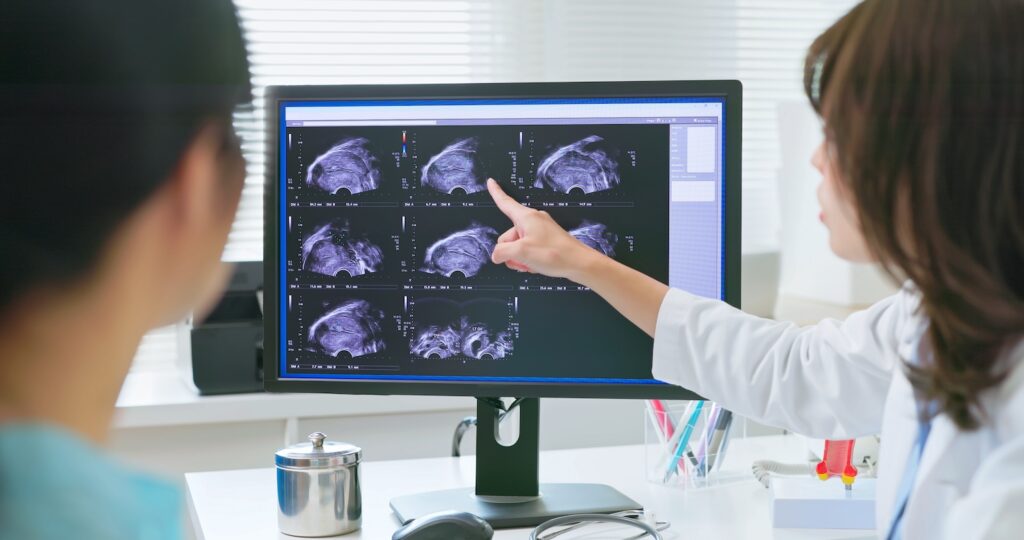
Ultrasound News refers to information about new ultrasound devices, diagnostic techniques, medical research, imaging software, and changes in clinical practice. It includes announcements about equipment, advances in image quality, AI-assisted examinations, and research into new applications for sound-wave technology.
Medical ultrasound works by transmitting high-frequency sound waves into the body. A transducer sends the waves and receives echoes that return from different tissues. The ultrasound machine processes these echoes to produce images that trained professionals can interpret.
Ultrasound technology is used in several medical fields. Obstetric ultrasound supports pregnancy assessment, echocardiography examines the heart, abdominal ultrasound evaluates selected organs, and Doppler imaging helps assess blood flow. Other applications include musculoskeletal imaging, vascular assessment, and image-guided procedures.
Readers following Ultrasound News should understand that not every new announcement represents a major clinical breakthrough. A prototype, research paper, commercial product, and independently validated clinical application are different things. Evaluating these distinctions helps readers understand which developments are ready for clinical use and which still require further investigation.
For broader technology coverage, readers can explore relevant articles on Cognetify.
Latest Ultrasound News and Medical Imaging Trends
The ultrasound industry continues to develop equipment and software designed to improve image acquisition, support clinical workflows, and expand access to diagnostic imaging. Several technology areas are receiving particular attention.
Ultrasound News About Artificial Intelligence
Artificial intelligence is becoming an important part of ultrasound development. AI-enabled systems can support selected image acquisition tasks, identify anatomical structures, calculate measurements, and help organize examination workflows.
Ultrasound examinations can be challenging because image quality depends on probe position, patient anatomy, and operator experience. AI guidance may help users obtain suitable images in specific applications. Automated measurements may also reduce repetitive work when the software is appropriately validated.
However, AI cannot guarantee a correct diagnosis. Software performance depends on the quality of the images, the patients included in validation studies, the device being used, and the intended clinical task. Clinicians must review images and interpret findings in the context of the patient’s symptoms and medical history.
Ultrasound News about AI is therefore relevant to both technology development and clinical training. The most useful systems are those that provide reliable support without encouraging users to treat automated results as unquestionable medical conclusions.
Ultrasound News About Portable Imaging Devices
Portable ultrasound devices are designed to make imaging available in more locations. Some systems are compact laptop-sized machines, while others use small probes connected to compatible mobile devices or dedicated displays.
Portable systems may be used in emergency departments, outpatient clinics, intensive care units, and bedside examinations. They can reduce the need to move certain patients to a separate imaging room when a focused examination can be performed safely at the point of care.
The capabilities of portable equipment vary. Some devices support a limited range of examinations, while others provide more advanced imaging modes and specialized probes. Healthcare professionals must select equipment according to the examination required, not simply its size.
Developments in portable ultrasound are particularly relevant where access to large imaging departments is limited. However, a portable device still requires appropriate training, maintenance, quality assurance, and clinical interpretation.
Ultrasound News About Point-of-Care Ultrasound
Point-of-care ultrasound, commonly called POCUS, is performed near the patient to help answer a focused clinical question. It may be used during an initial assessment to examine selected structures in the heart, lungs, abdomen, and blood vessels.
POCUS can provide information during emergency care and bedside evaluation. For example, trained clinicians may use it to look for selected signs of fluid accumulation or assess particular aspects of cardiac function.
The examination is usually targeted rather than comprehensive. A focused bedside scan does not automatically replace a full diagnostic study performed by a specialist when that study is indicated.
Training and experience remain essential because ultrasound images can be difficult to acquire and interpret. A normal or inconclusive bedside examination does not always rule out a medical condition.
Ultrasound News About Advanced Image Processing
Image processing is another important area of ultrasound development. Modern systems may use software to improve image presentation, reduce certain forms of noise, and assist with visualization of selected structures.
These features can make images easier to assess, but image enhancement is not the same as improved diagnostic accuracy. A clearer-looking image does not necessarily establish that a disease is present or absent.
Clinicians should understand the capabilities and limitations of the processing tools available on their systems. Equipment selection should reflect the clinical application, the available evidence, and the training of the intended users.
Ultrasound News About Three-Dimensional Imaging
Three-dimensional ultrasound creates a spatial representation of selected structures. It is used in applications such as obstetric imaging and certain cardiac examinations, where additional spatial information may help clinicians assess anatomy.
Three-dimensional imaging depends on suitable data acquisition, image quality, and software processing. It does not automatically provide better results than two-dimensional imaging in every situation.
Research into improved displays and visualization tools may make complex anatomy easier to understand. The clinical benefit, however, depends on the examination and the questions that healthcare professionals need to answer.
Ultrasound News in 2026: Important Areas of Development
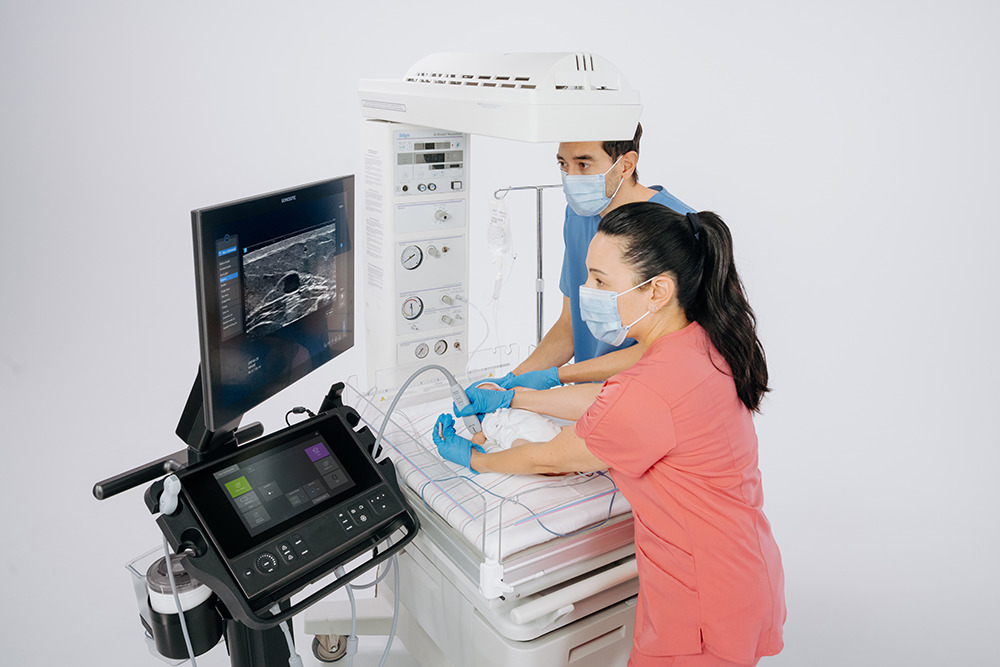
Medical imaging continues to change as equipment manufacturers, research teams, and healthcare organizations investigate new ways to use ultrasound. Several developments illustrate the current direction of the field.
Ultrasound News About AI-Assisted Prenatal Imaging
Prenatal ultrasound is an important application of diagnostic imaging. It can help clinicians assess fetal development, examine anatomy, and monitor aspects of pregnancy when medically indicated.
Researchers are investigating whether AI-assisted tools can support selected prenatal assessments in settings where experienced sonographers are not readily available. Some research has explored simpler image acquisition approaches combined with machine learning models to estimate specific pregnancy-related measurements.
These approaches may eventually help extend access to certain examinations, but they require appropriate evaluation and clinical oversight. The performance of a research model does not establish that every device or scanning method is suitable for unsupervised use.
Pregnancy examinations should continue to follow appropriate clinical guidance. Patients should discuss scan timing, findings, and any recommended follow-up with a qualified healthcare professional.
Ultrasound News About Compact Professional Systems
Compact ultrasound systems are designed to combine mobility with features traditionally associated with larger equipment. They can support imaging in different care environments while offering selected advanced imaging and workflow functions.
The practical value of a compact system depends on its image quality, probe selection, software, battery performance where relevant, and compatibility with clinical requirements. Some examinations need specialized equipment that may not be available on every portable device.
Healthcare facilities should assess performance and total operating requirements before purchasing equipment. A smaller system may improve flexibility, but it must still meet the needs of the intended examination.
Ultrasound News About Wearable Imaging Research
Wearable ultrasound is an emerging research area involving devices designed to remain in contact with the body and collect imaging information over time. Researchers are investigating whether these systems could support monitoring in selected clinical situations.
Potential applications include studying certain cardiovascular measurements and other physiological changes. In principle, repeated monitoring could provide information that is not available from a single examination.
Important challenges remain. Wearable devices must maintain consistent contact with the skin, accommodate movement, manage power requirements, and produce information that can be interpreted reliably. Researchers must also establish how the collected data should be used in clinical decisions.
Wearable ultrasound should therefore be understood as a developing field rather than a universal replacement for conventional diagnostic examinations.
Ultrasound News About Robotic Assistance
Robotic systems are being developed to assist with selected imaging tasks and image-guided procedures. These systems may help position probes, maintain contact, or support repeatable movements under appropriate supervision.
Robotic assistance could be useful in situations where consistent probe placement is important. It may also support research into remote or semi-automated scanning workflows.
However, robotic imaging systems need careful evaluation for safety, reliability, image quality, and ease of use. The presence of automation does not remove the need for clinical oversight or a clear procedure for handling unexpected findings.
Comparison Table 1: Traditional and Modern Ultrasound Systems
| Feature | Traditional ultrasound systems | Modern ultrasound systems |
|---|---|---|
| Equipment design | Commonly cart-based | Cart-based, compact, or handheld |
| Image processing | Conventional imaging tools | May include advanced processing |
| Measurements | Manual or semi-automated | May include automated measurements |
| Portability | Depends on equipment design | Some models offer greater mobility |
| Software assistance | Varies by system | May include AI-assisted functions |
| Clinical applications | Established diagnostic examinations | Established uses and selected newer applications |
| Training requirements | Depends on examination | Still requires appropriate training |
| Main limitation | Image quality and operator skill | Image quality, validation, and operator skill |
Modern ultrasound systems can provide additional features, but newer equipment is not automatically suitable for every examination. The appropriate choice depends on clinical needs, validated performance, equipment availability, and user experience.
How Ultrasound Technology Works
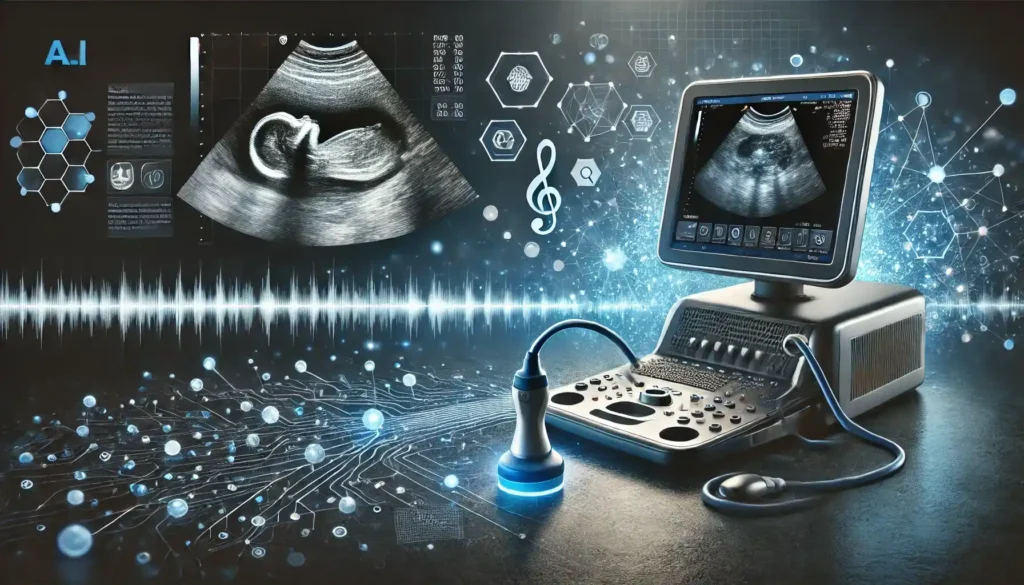
Understanding the basic process behind ultrasound helps readers interpret Ultrasound News more accurately. The technology uses sound waves to generate images rather than relying on ionizing radiation.
A transducer sends sound waves into the body. Different tissues reflect portions of the sound back toward the transducer. The system measures the returning echoes and uses signal-processing methods to construct an image.
The appearance of an ultrasound image depends on tissue properties, the frequency of the sound waves, probe position, imaging settings, and the patient’s anatomy. This explains why the same examination may be more difficult in some patients than in others.
Ultrasound News About Transducer Technology
The transducer is one of the most important components of an ultrasound system. It converts electrical energy into sound waves and converts returning echoes into electrical signals that the machine can process.
Different transducers are designed for different clinical applications. Linear probes are commonly used for superficial structures, while curved-array probes are frequently used for abdominal examinations. Other probe designs are intended for cardiac, obstetric, or specialized imaging.
Transducer design affects image quality, penetration, field of view, and usability. Improvements in transducer technology may allow manufacturers to develop compact devices and improve imaging performance for selected applications.
The appropriate probe depends on the body area, examination requirements, and the capabilities of the ultrasound system.
Ultrasound News About Doppler Imaging
Doppler ultrasound evaluates movement, particularly blood flow. It uses changes in the returned sound signal to provide information about the direction and characteristics of flow.
Color Doppler displays flow information visually, while spectral Doppler can provide measurements related to blood-flow velocity. Different Doppler techniques serve different purposes and should be selected according to the clinical question.
Doppler imaging is used in selected vascular, cardiac, abdominal, and pregnancy-related examinations. It can help clinicians investigate circulation, but results must be interpreted alongside other clinical information.
Ultrasound News About Elastography
Elastography is an ultrasound technique that estimates tissue stiffness. Depending on the method and clinical application, this information may support assessment of selected liver conditions and other tissue abnormalities.
Tissue stiffness is not a diagnosis by itself. Results can be affected by technical factors, the patient’s condition, and the specific method used.
Clinical interpretation should follow the appropriate guidelines and take account of the limitations of the technique.
Ultrasound News About Image Quality
Image quality affects the usefulness of an ultrasound examination. Poorly positioned probes, patient movement, tissue characteristics, and inappropriate settings can make structures difficult to assess.
Higher-frequency sound waves generally provide more detail in superficial tissues but penetrate less deeply than lower-frequency waves. Clinicians select the appropriate frequency and probe according to the body area being examined.
Image-processing software can assist with presentation, but it cannot recover every detail that was not captured during the scan. Good technique and suitable equipment remain fundamental to diagnostic quality.
Comparison Table 2: Ultrasound, X-Ray, and CT Scans
| Feature | Ultrasound | X-ray | CT scan |
|---|---|---|---|
| Imaging method | High-frequency sound waves | X-ray radiation | Multiple X-ray measurements |
| Ionizing radiation | No | Yes | Yes |
| Real-time imaging | Often available | Usually limited | Generally produces a series of images |
| Soft-tissue assessment | Useful for selected structures | Limited in many applications | Detailed cross-sectional imaging |
| Common applications | Pregnancy, organs, blood flow | Bones and chest | Trauma and many complex conditions |
| Portability | Available in compact formats | Depends on equipment | Usually requires a dedicated scanner |
| Important limitation | Affected by gas, bone, and technique | Limited soft-tissue contrast in many cases | Radiation exposure and clinical suitability |
These methods serve different purposes. A healthcare professional chooses an imaging examination based on symptoms, medical history, suspected condition, and the information needed to make a clinical decision.
Benefits and Limitations of Modern Ultrasound
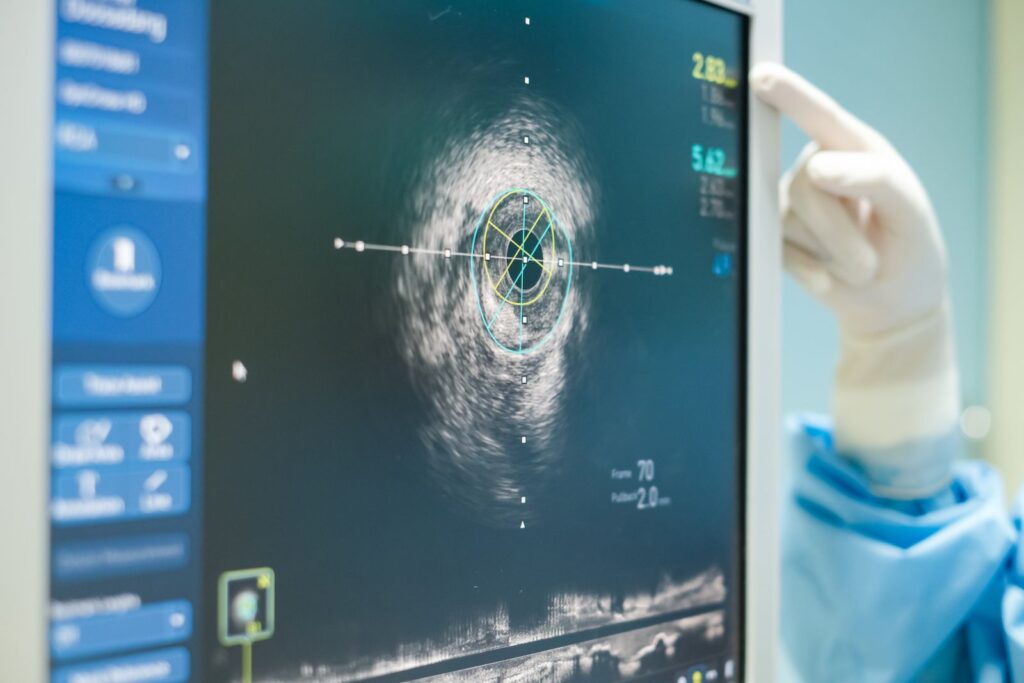
Ultrasound provides real-time imaging for many applications and does not use ionizing radiation in conventional diagnostic examinations. It can be performed with portable equipment and may support selected procedures when used by appropriately trained professionals.
Its limitations are equally important. Ultrasound does not clearly show every structure, and gas or bone can interfere with sound-wave transmission. Certain examinations require specialized equipment or extensive operator experience.
AI-assisted tools can help with selected tasks, but automated outputs may be inaccurate. Software should be evaluated for its intended use, and clinicians should remain responsible for reviewing images and interpreting findings.
Ultrasound News About Patient Safety
Patient safety is central to medical imaging. Diagnostic ultrasound is generally considered safe when used appropriately by trained professionals for medical purposes.
Examinations should have a clear clinical purpose, and exposure should be managed according to accepted professional guidance. Patients can ask why a scan is recommended and how its findings may influence their care.
The introduction of new imaging software does not remove the need for quality assurance, appropriate training, and responsible clinical decisions.
Ultrasound News About Access to Healthcare
Portable ultrasound may improve access to selected imaging examinations in clinics, rural settings, and bedside environments. It can be particularly helpful when patients have difficulty travelling to a larger medical facility.
Nevertheless, access to equipment is only one part of the process. Reliable imaging also requires trained users, maintenance, appropriate interpretation, and a system for referral or follow-up when results are abnormal or uncertain.
Healthcare organizations should evaluate the complete service rather than considering the purchase price of a device alone.
For related digital and technology topics, readers can visit Cognetify.
How to Evaluate Ultrasound News Reports
Medical technology announcements often use terms such as advanced, intelligent, automated, and next-generation. These terms do not necessarily demonstrate that a device improves diagnosis or patient outcomes.
Readers should look at what was actually tested, how many patients were involved, which outcomes were measured, and whether the findings were independently evaluated. Research conducted in a laboratory may establish technical feasibility without proving that a device is ready for routine clinical use.
Regulatory authorization also needs to be understood in context. Authorization applies to a particular device and its intended uses; it should not be interpreted as approval for every possible application.
Another important distinction is the difference between image quality and diagnostic accuracy. A system may produce images that appear clearer without necessarily identifying disease more accurately. Clinical studies are needed to evaluate the outcomes that matter for patients.
Ultrasound News and Clinical Evidence
Clinical evidence helps establish whether a technology performs as intended in real-world settings. Researchers may compare a new system with an accepted reference method or assess whether it changes workflow, diagnostic performance, or patient management.
The results should be interpreted according to the study design and the population included. A small study may provide useful early evidence but may not establish performance across different hospitals or patient groups.
Readers should also consider whether the reported findings have been replicated. Consistent results across appropriately designed studies provide stronger support than a single announcement.
Ultrasound News and Medical Equipment Costs
The cost of ultrasound equipment includes more than the initial purchase price. Organizations may need to budget for probes, software, maintenance, repairs, training, data management, and replacement parts.
Portable devices can reduce some logistical requirements, but their value depends on the applications they support and the frequency of use. A device that is inexpensive but unsuitable for the intended examination may not provide good value.
Healthcare facilities should compare total costs with clinical requirements, expected use, service availability, and validated performance.
For more information about digital innovation, readers can explore Cognetify’s technology content.
Future Ultrasound News and Healthcare Innovation
Future developments in ultrasound may involve improved image processing, AI-assisted acquisition, compact systems, robotic support, and wearable imaging research. These developments could expand the range of settings in which selected ultrasound examinations can be performed.
The pace of adoption will depend on clinical evidence, affordability, training, regulatory requirements, and compatibility with healthcare workflows. Technologies that demonstrate reliable performance and practical value are more likely to become established in clinical practice.
Ultrasound News About AI and Automation
AI may help automate selected measurements and support image acquisition. In some settings, these capabilities could make routine workflows more consistent or reduce repetitive tasks.
However, automation must be designed around patient safety. Systems should be tested on appropriate populations, and healthcare professionals need clear procedures for checking uncertain or unexpected results.
Future progress will depend not only on the sophistication of the software but also on how well it supports clinicians in real-world conditions.
Ultrasound News About Remote and Community Healthcare
Remote and community healthcare services may benefit from compact ultrasound devices and improved training tools. In suitable settings, trained personnel could collect images that support an initial assessment or help determine whether specialist evaluation is needed.
Remote support can be useful, but it depends on image quality, communication systems, access to qualified interpretation, and appropriate follow-up pathways.
Technology cannot compensate for every shortage in healthcare staffing or infrastructure. Successful implementation requires coordination between equipment providers, clinical teams, and healthcare organizations.
Ultrasound News About Research and Innovation
Research may continue to explore ultrasound applications beyond conventional diagnostic imaging. These include wearable monitoring, improved visualization, and selected therapeutic uses of focused ultrasound.
Diagnostic imaging and ultrasound-based treatment are not the same. Some therapeutic techniques use focused sound energy to affect tissue, and their indications, risks, and evidence differ from those of routine diagnostic scanning.
Reports about experimental applications should clearly explain whether a technique has been tested in laboratory settings, clinical trials, or established practice.
Ultrasound News About Training and Education
As ultrasound devices become more portable, training becomes increasingly important. Clinicians need to understand how to acquire suitable images, recognize limitations, and determine when additional examinations are required.
Simulation, structured teaching, supervised practice, and assessment can help develop scanning skills. AI-based guidance may support learning in selected applications, but it should not replace appropriate clinical education.
Healthcare organizations should ensure that staff are trained for the examinations they perform and understand the limits of the equipment they use.
Frequently Asked Questions About Ultrasound News
What is Ultrasound News?
Ultrasound News covers developments in ultrasound equipment, medical imaging techniques, clinical research, and diagnostic technology.
What are the latest ultrasound technology trends?
Important trends include AI-assisted imaging, portable systems, point-of-care ultrasound, advanced image processing, and wearable ultrasound research.
Is diagnostic ultrasound safe?
Diagnostic ultrasound is generally considered safe when used appropriately by trained healthcare professionals for medical purposes.
Does ultrasound use ionizing radiation?
No. Conventional diagnostic ultrasound uses high-frequency sound waves rather than ionizing radiation.
How does artificial intelligence help ultrasound?
AI can assist with selected imaging tasks, anatomical recognition, automated measurements, and examination workflows.
What is portable ultrasound?
Portable ultrasound uses compact imaging equipment that can be used in different clinical settings, including at the bedside.
Can ultrasound detect every medical condition?
No. Ultrasound has limitations, and some conditions require other imaging methods or additional tests.
What is point-of-care ultrasound?
Point-of-care ultrasound is focused imaging performed near the patient to help answer specific clinical questions.
What is the difference between ultrasound and CT?
Ultrasound uses sound waves, while CT uses X-rays to produce cross-sectional images of the body.
Can AI replace an ultrasound specialist?
No. AI can support selected tasks, but professional training, image assessment, and clinical judgment remain essential.
Where can I follow Ultrasound News?
Readers can follow medical imaging research, healthcare technology announcements, and relevant technology articles on Cognetify.
Conclusion: Why Ultrasound News Matters
Ultrasound News helps readers understand developments in medical imaging, from portable systems and AI-assisted workflows to advanced image processing and emerging research. These technologies may support selected clinical tasks and expand access to imaging, but their value depends on appropriate use, reliable evidence, and professional expertise.
The future of ultrasound will be shaped by improvements in equipment, clinical research, training, and healthcare delivery. Readers should assess new announcements carefully and distinguish between promising research and proven clinical benefits.
By following Ultrasound News and understanding the strengths and limitations of ultrasound technology, readers can develop a clearer picture of how diagnostic imaging is changing and why responsible innovation matters for healthcare.

- How to Use Canva: 7 Easy Steps for Beginners - October 19, 2026
- How Much Is DEF Per Gallon in 2026? Best Prices & Savings - October 16, 2026
- Best AI Tools for Presentationin 2026 - October 15, 2026